

Test the game mode, get to know the bonus flow, and set limits so you start in Netherlands with calm and overview.
A trial round sounds simple, but it's often the difference between “just playing for a bit” and unknowingly getting stuck. Imagine: you open a slot after dinner, you want to relax, but you notice yourself clicking faster and faster because you don't yet understand what you're seeing. With a practice mode, you take that tension out of it, because you can first see how the game reacts to your pace and choices.
Use that first session as if you're setting up a new app. You check where the game info is, how to open settings, and you get a feel for whether the rhythm suits you. Many players skip this and only later discover minor irritations: buttons that are too small on mobile, a pace that makes you restless, or an autoplay option that puts you in a 'tunnel' faster than you expected. Now you can calmly test that, without pressure.
In Netherlands, the exact access varies by platform, but the principle remains the same: play only within the applicable rules and age limits for games of chance. That's why the practice mode also helps train your own limits. You practice stopping on time, you practice pausing, and you learn to recognize when you're playing “on feeling”. That's not a moralistic story, it's simply practical: whoever feels in control plays more calmly.
All promotional incentive structure is clearly stated in writing and/or via electronic means in an easily understood manner. All codes are accompanied by an explanation of what the code is for, who is eligible to use the code, and how it should be used. As such, players are less likely to be confused about what is required of them in order to receive a reward and how the reward will be applied after receiving it. The promotional incentives provided to participants provide them with time to become familiar with the gaming system's mechanics, their interface, and progress, before deciding how deeply they wish to become involved with this platform. Therefore, players are encouraged to participate in an informed manner, rather than being pressured or tempted to act quickly.
Short sessions are the norm in 2026: a few minutes on the train, a block during lunch break, maybe a bit more on the PC later. Imagine: you only have seven minutes, and you don't want to stop halfway because you haven't figured out where your settings are. Then it's smart to first explore the basics: pace, bet buttons, pause, closing.
See your session as a mini-plan with a beginning and an end. You start with a goal (for example: “today I'm only testing pace and stopping point”), you play a short series, and you consciously conclude. That sounds almost too neat for a game, but precisely that structure prevents you from endlessly doing “just one more” without realizing it. If you notice that even in a short trial round you already tend to stay longer, that's valuable information to tighten up your breaks.
On mobile, short play only works if your screen is calm. On PC, it only works if you don't automatically speed up because everything clicks so smoothly. You don't have to be strict, you just have to start smart. And starting smart means: first explore, then decide whether to continue.
Before you really "get into the swing of things," it helps to know what you're looking at. Imagine: you see a few symbols fall, something flashes on the screen, and you think you've missed something. That feeling makes you uneasy, and uneasiness makes you rush. So, take one minute to read the window: where is your bet, where do you see what just happened, and where is the button to open rules or explanations?
Also consider your own playing style. Some players like to keep rolling, others want to make a decision each round. In a practice session, you can discover what gives you the most control. Not to find "the perfect pace," but to avoid falling into a pattern later that you actually don't like.
Most mistakes happen not because of the game, but because of haste. Imagine: you want to quickly check something, you immediately click start, and only then do you try to understand where the bet button is. Then you're correcting while you're already playing, and that makes your session messy. Therefore, start with a calm check: open the game info, see where symbols and functions are explained, and then close it again without stress.
Make it concrete: find the settings button, test where you change the pace, and see how to go back to the game. You don't need to memorize details, you just need to know where to find them. If you have a question later, you don't want to "keep spinning until you get it." You want to be able to check and continue, or quit.
And pay attention to your focus. If you notice after ten rounds that your mind is wandering, that's a signal to keep sessions shorter. Control isn't playing longer, control is being able to stop at your moment.
Pace is the button that most quickly brings you to calm or to a tunnel vision. Imagine: you increase the speed "to test faster," and suddenly you feel that you are only reacting instead of choosing. Therefore, first set everything calmly. Play a short sequence manually and see if your attention stays focused.
Then try a short autoplay block (small, conscious) and stop immediately when the block is finished. The question is simple: do you still feel in control, or do you want to continue automatically? If you notice that after such a block you no longer know exactly what you just did, that is your signal to limit autoplay or avoid it entirely.
Pause is your best friend here. Not as a punishment, but as a reset. A short breath, hands off the screen for a moment, and only then decide: another block or stop. The more often you practice this, the less you'll have to rely on willpower later.
Setting Up Mobile For Calm And Fewer Misclicks
On mobile, mistakes often happen due to small tap errors. Straighten your phone, keep your grip relaxed, and reduce the pace if you notice your thumb becoming too fast. Choose an environment where you are not rushed by notifications, and make your session extra short if you are on the go.
Setting Up PC For Focus Without Overclicking
On PC, the pitfall is precisely ease: everything reacts quickly, so you click faster. Establish a mini-ritual: after each short sequence, take your hand off the mouse for a moment and choose again. If you notice yourself becoming "automatic," reduce your pace or quit.
Without limits, a session is often a slippery slope. Imagine: you wanted to play for ten minutes, but you look at the clock and an hour has passed because you didn't have a real endpoint anywhere. Then the problem isn't with the game, but with your structure. By choosing settings beforehand, you make it easier to stop on time.
In the Netherlands, responsible gaming is not just a slogan; it's something you set up. You play within the applicable rules and you take into account the age limits for gambling. The practical translation is simple: plan your session, choose your pace, determine your budget, and use pauses as soon as you notice yourself getting faster or more restless. The less you have to improvise during play, the calmer you will remain.
The table below helps to make your trial round goal-oriented. You don't use it to "win better," but to keep your session predictable.
|
Part Of Your Session |
What To Pay Attention To |
Practical Choice |
Why It Helps |
|
Session Duration |
Do you lose track of time? |
Timer and fixed stop moment |
Prevents playing on impulse |
|
Game Pace |
Do you speed up when tense? |
Start calmly, only speed up later |
Keeps decisions conscious |
|
Autoplay |
Do you get tunnel vision? |
Short blocks or off |
Less automatic click flow |
|
Betting Pattern |
Do you change too often? |
One base bet per session |
Less impulse and noise |
|
Pauses |
Can you really stop? |
Pause after each block |
Reset your focus |
|
Account Security |
Do you make quick mistakes? |
Strong login and extra security |
Less stress afterwards |
|
Support Usage |
Do you push through friction? |
Ask and then close |
Reduce pushing through irritation |
A timer only works if you link an action to it. Imagine: you hear the signal and you think 'just one more round'. That one round often turns into a whole series. Therefore, make it black and white: signal means ending. No negotiation, just finish.
Choose a stop ritual that is small. Close the game, put your phone away, or stand up and walk to another room. The point is to get your brain out of the flow. If you still want to continue after two minutes, you can consciously start a new short session, but with the same plan: beginning and end.
If you notice that you often ignore the timer, make your sessions shorter and take breaks more often. That's not strictness, that's a practical adjustment to how you react.
Much restlessness comes from too many small choices. Imagine: you change your stake every few rounds because you 'just want to feel' how it's different. That sounds logical, but it makes your session chaotic and triggers impulse. Rather choose one basic stake and leave it as is.
Do you still want to test? Do it controlled: change once, play a short series, and go back to your base. This way you learn the effect without ending up in an endless 'just adjust' cycle. And make one extra rule: decide about money before your session or after your session, not in the middle. In the middle there is emotion, and emotion is rarely a good advisor.
If you notice that you primarily want to increase after an exciting moment, take a break first. A break is the moment when you choose again, instead of reacting.
Taking a break sometimes feels like you're missing something, but it's often exactly what keeps your session light. Imagine: you notice yourself clicking faster and stopping seems 'a waste'. That's the signal, not to continue, but to pause. A short time-out breaks the pattern and gives you space to choose again.
Use longer interruptions if you repeatedly notice that you are stretching your own rules. Self-exclusion is a heavier option, but for some players, it's actually a relief: you don't have to fight with yourself, you set a boundary that doesn't negotiate. The goal is always the same: to bring back calm, so that playing remains a conscious choice.
And if you play because you want to suppress stress, choose distance. Take a walk, drink water, do something else. Playing should be relaxation, not an escape you disappear into.
The transition from practicing to real money changes your focus. Imagine: in the trial round, you were calm, but as soon as money is involved, you start clicking faster and 'checking' more often to see if something happens. That's normal. Therefore, make the step small: short session, calm pace, clear stop rule.
Complete the 'administration' separately from your session. Registration, settings, choosing a payment method, you better do that at a moment when you are not already in game mode. In Netherlands, you play within the applicable rules and take into account the age limits for gambling, so take those steps seriously and do them calmly. Haste is the enemy of a relaxed session.
Account matters feel boring, but they determine how much hassle you'll have later. Imagine: you want to start quickly, you choose an easy password, and you think you'll sort it out later. Later usually doesn't come, and then you're stuck with recovery stress at the moment you wanted to relax. Choose a strong password immediately, store your data securely, and enable extra security if available.
Also check where you set limits and breaks. Many players only look for that when they are already restless. By finding it beforehand, your session later truly remains a session, without friction. And if you have any doubts, ask support before you start playing, not during playing.
Safety is not a show. It's simply the way to keep your mind calm.
Most impulse decisions are about depositing more or increasing stakes. Imagine: you had a few good rounds and you think "I'll add a bit more, then it feels bigger". That's exactly when your plan disappears. So, make one simple rule: one deposit per session, no exceptions.
Choose an amount you can afford to lose and treat it as entertainment costs, not something that "has to come back". Keep your stake stable and only change it after a break. If you notice yourself getting restless or trying to convince yourself to continue, stop. The best session is often the one you end on time.
And if you do feel the urge to increase, first lower your pace. Slowing down makes the choice yours again.
Restlessness around payouts often comes from expectations. Imagine: you request a payout and you expect it at a certain time, but it turns out differently because processing can vary per method. Then stress arises, and stress can pull you back into the game. Therefore, keep it business-like: choose one method you understand, keep your data consistent, and expect that processing may differ.
Don't "experiment" with multiple changes at once if you don't understand something. That often makes it messier. Use support for explanations, and wait to play until your mind is calm again. A payout should be a conclusion, not a trigger.
If you notice that restlessness makes you want to keep playing, a break is the best choice. First rest, then decide.
Support isn't just for technical malfunctions. Imagine: you can't find a setting, you get irritated, and you click faster to "just fix it". Then you extend your session precisely because of the frustration. Rather ask for a brief explanation, solve it, and then close as you had planned.
Also use support for questions about account steps or payment methods. The goal is clarity, not "just trying". And if you notice that playing causes tension instead of relaxation, choose distance and help. That can be as small as a time-out or a conversation with someone you trust. Calmness is the compass: if calmness is gone, stopping is often the best move.
Most mistakes are predictable, and precisely because of that, they are easy to prevent. Imagine: you start without a plan, you speed up because it's "going well", and you only stop when you're tired. That's not bad luck, that's the lack of an end. The fix is simple: shorten your session, lower your pace, and make your stop action active.
A second mistake is playing at the wrong time: rushed, irritated, tired. Then you act more impulsively. Rather choose a moment when you truly have space, even if it's just ten minutes. And if you notice you're still restless, use pause options and stop. Responsible playing in practice doesn't feel like a lesson, but like a routine that keeps your mind light.
Finally: tinkering with your stake too often. That feels like taking control, but often it's emotion in action. One basic stake, short blocks, and done. That's boring on paper, but pleasant in reality.
A checklist helps because you don't have to improvise. Imagine: you want to start, but you don't want to think about ten things at once. Do this: set a timer, choose a calm pace, choose one basic stake, play one short series, and then stop. Only after stopping do you decide if you want another short series.
If you notice halfway through that you're speeding up, take a break and go back to your baseline. If you notice you have to convince yourself to continue, stop. These two signals are often more reliable than your "desire" at that moment.
Keep it simple and repeatable. In 2026, that's the most realistic way to treat a slot as entertainment: short sessions, clear limits, and finishing on time.
Before you start, set a short timer and agree with yourself that the signal is the end, no discussion. Choose a calm pace, play one short series, and then stop, even if you were "just getting into it". Imagine you only wanted to quickly test if the game feels pleasant: then finishing is precisely the right action, because you prevent a mini-moment from turning into a long session.
The most feeling of control usually comes from a calm pace and a fixed basic stake, because that way you have fewer decisions to make while playing. Imagine that after an exciting moment you suddenly want to click faster or increase: then lower your pace, take a short break, and only then decide if you continue. Through that small delay, the session remains yours, instead of your impulse's.
Autoplay is often a bad idea if you notice that after a block you no longer know exactly what you just did or if you automatically want to continue even though you actually wanted to stop. Imagine you start "just one block" and then immediately want another one, without consciously choosing: then limit autoplay to very short blocks or turn it off. The goal is that you keep choosing per session, not that you keep rolling out of habit.
Stop and distance yourself, because frustration draws you faster into pushing through. Imagine you can't find a setting and you think: I'll just keep playing until I understand it. Do the opposite: pause, calmly look for game info or ask support, and only restart when your mind is neutral again. Frustration is a signal to stop, not to speed up.
Make the budget small and simple: one amount per session that you can afford to lose, and no extra deposit in that same session. Imagine that after a few rounds you think you "need to add some more" to make it feel better: then first take a break and ask yourself if you're still playing for pleasure. By keeping money decisions outside your session, you prevent emotion from controlling your budget.
Immediately take a time-out and do something else that truly calms your system, such as taking a walk, showering, or calling someone. Imagine you notice that you're not playing for relaxation but to avoid feeling how your day was: then continuing is rarely a good idea. Only when you are neutral again can you choose whether you want to play at all, and if not, stopping is the most mature choice.
Keep it practical: only play within the applicable rules and age limits for gambling, choose short sessions, set a timer, and use breaks as soon as you notice your pace accelerating. Imagine that you keep shifting your own stop times: then take a longer break or set stricter limits. Responsible playing in practice is mainly: planning, executing calmly, and finishing on time.
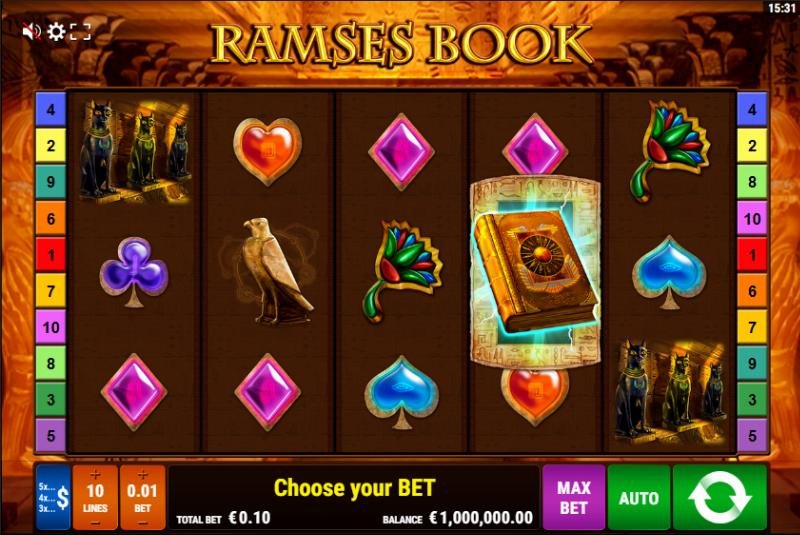
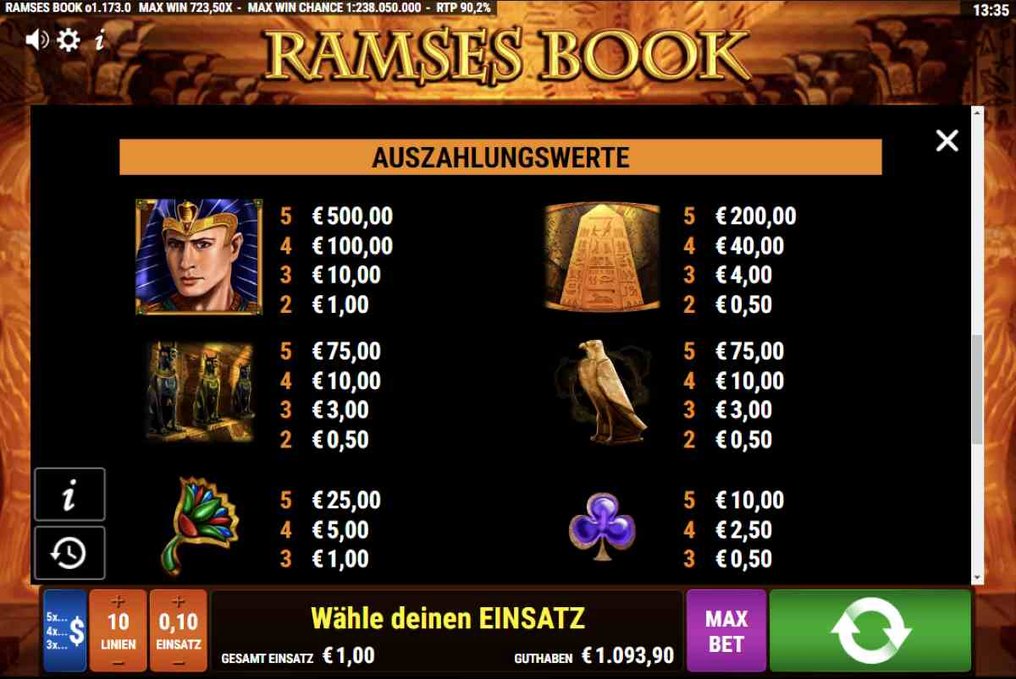
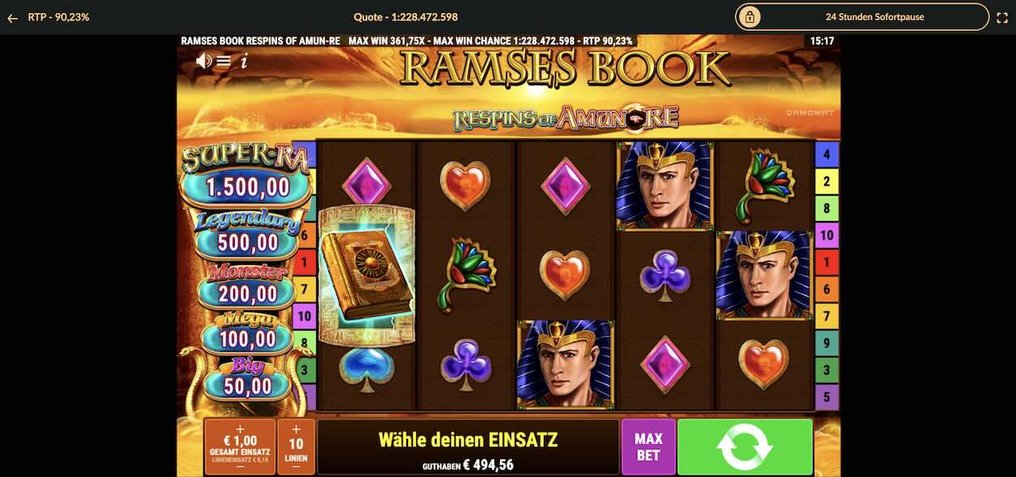
Ramses Book is a fascinating game that combines the best of online slots with an exotic and exciting theme.